Home server power consumption
- 1 minReducing the number of subscriptions the household uses has been one of the drivers of moving to a self-hosted media server. I touched on the potential savings in the opening post and promised to loop back in the review.
The results are in, and it’s time to do the math. For a baseline, I measured the 24hr power consumption over five days.
| Day | Consumption (kWh) |
| ——— | ——— |
| Day 1 | 0.219 |
| Day 2 | 0.200 |
| Day 3 | 0.133 |
| Day 4 | 0.222 |
| Day 5 | 0.187 |
| Total | 0.916 |
These days were pretty typical usage-wise. After adding a few new audiobooks and albums, plus backing up photos from my phone, there was some light indexing. Beyond that. . . usual consumption patterns. The server was completely switched off as we were out of the house for a couple of days. There is no point in running a local-only server when no one is on the network.
This gives an average daily power usage of 0.1922kWh
Our energy provider charges 28.149p per kWh.
Over a week, the home server will cost 37.87p. Per month, this equates to £1.64. . . which is significantly less than the £2.50 initially predicted.
Potential savings
Looking at the setup, far more power is being drawn than might be otherwise. We’re using a powered dock to accommodate older platter-based drives. I suspected this would consume a more significant chunk of power than the pi itself.
So I also measured that, clocking the HDD as using 0.143 24 hours. That’s more than half of the power consumed!
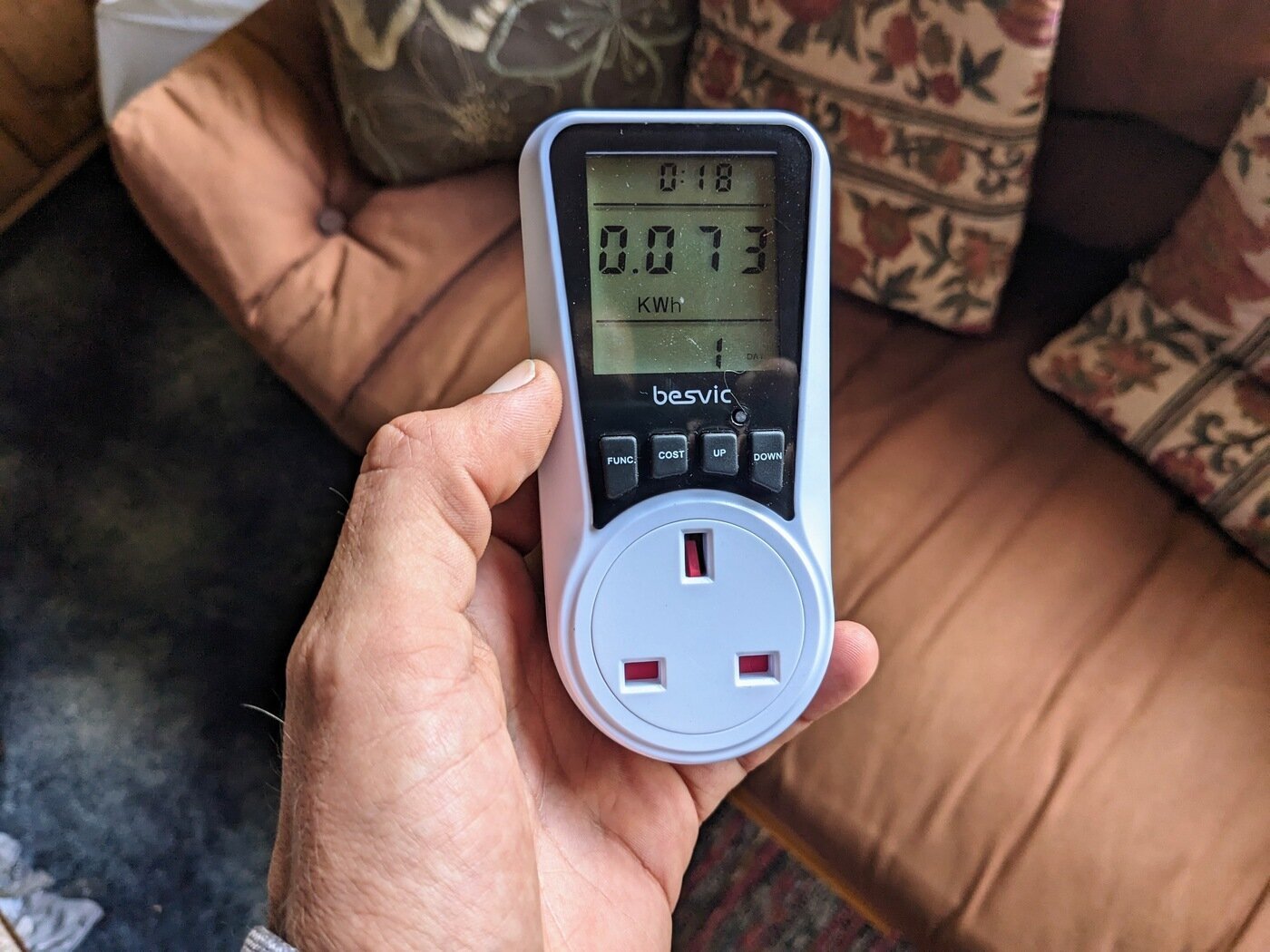
The Pi clocked in using .073 kWh over a 24hr period, which pairs up with the HDD drives.
None of these figures are ridiculous, but they are worth considering. For the sake of argument, our platter-based drive is responsible for 80p a month of electricity. Even if that drops to zero by swapping in an SSD drive, it’ll take decades to recoup the hardware cost.